
Key Takeaways:
How Does Structured Learning Help Build Resilience in Students?
- Resilience helps students recover from academic setbacks and continue learning with greater confidence.
- Structured learning gives students clear routines, manageable goals, and steady support when tasks become difficult.
- TLS Academy supports student resilience through gradual challenges, supervisor guidance, and mastery-based progress.
- Reflection helps students understand the cause of mistakes, adjust their approach, and develop stronger problem-solving habits.
- Character development helps students build perseverance, responsibility, and confidence beyond academic performance.
Introduction
Academic setbacks can affect students at any age. A difficult topic, poor test results, missed deadlines, or repeated mistakes may leave some learners feeling discouraged. Resilience is the ability to recover, continue learning, and respond constructively when challenges arise.
At TLS Academy, building students’ resilience is part of a structured, supportive learning environment. As a private Christian school in Singapore offering education from Grade 1 to Grade 12, TLS Academy helps students progress at a suitable pace while developing responsibility, perseverance, and confidence.
This matters because resilience is not developed solely through pressure. Students often need clear expectations, consistent routines, and trusted adults who can help them respond to difficulties in practical ways. When support is structured, learners are better able to understand setbacks, manage frustration, and keep moving forward without feeling that one mistake defines their ability.
How Does Structured Learning Help Students Become More Resilient?
Resilience Grows When Challenges Are Introduced Gradually
Students do not become resilient by being overwhelmed. They build coping skills when challenges are manageable, guided, and suited to their current level. TLS Academy uses PACE (Packet of Accelerated Christian Education) tasks to introduce learning in clear, incremental steps, allowing students to experience progress while still facing meaningful academic demands.
For younger learners, this may involve shorter, scaffolded activities that develop focus and early problem-solving. For older students, it may involve longer assignments, multi-step thinking, and independent planning. This gradual exposure supports resilience because students learn that difficulty is not a sign of failure, but part of learning.
This step-by-step structure also helps students build emotional readiness. When a task becomes more challenging, students are not suddenly expected to cope on their own. They have already developed routines for carefully reading instructions, completing work in stages, checking their answers, and asking for guidance when needed. These habits make challenges feel more manageable and less intimidating.
Supervisors Guide Students Through Setbacks
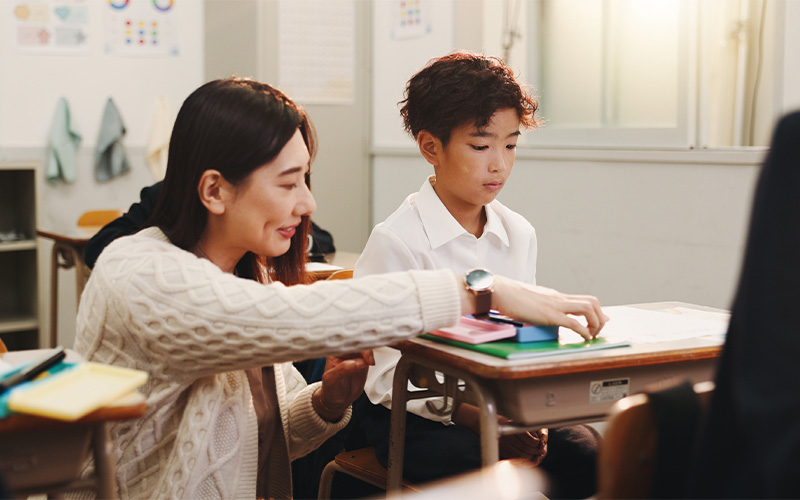
When students face academic difficulty, the response they receive matters. At TLS Academy, supervisors monitor progress and provide constructive guidance when students struggle. Instead of removing every obstacle, staff help students understand what went wrong and how to try again more effectively.
This approach supports building students’ resilience by helping them practise persistence in real learning situations. Students are encouraged to review errors, adjust their approach, and continue working with support. Over time, they learn that setbacks can be managed through reflection, effort, and better strategy.
For example, a student who performs poorly on a task may need help identifying whether the issue came from weak understanding, careless reading, poor time management, or lack of revision. With supervisor support, the setback becomes less emotional and more actionable. The student is guided to focus on the next step, rather than staying discouraged by the result.
Why Does Mastery Matter When Students Face Academic Pressure?
Mastery-Based Progress Reinforces Persistence
Comparison can discourage students, especially when they feel behind their peers. TLS Academy’s individualised model focuses on each learner’s performance level, allowing students to progress at their optimum rate of achievement. This supports mastery-based learning, where students move on after understanding the material.
This structure helps students connect effort with improvement. Primary students gain encouragement through small wins, while secondary students develop longer-term persistence across subjects. As they complete PACE work step by step, they begin to see that steady effort can produce measurable progress.
Mastery also helps reduce the fear of moving forward without a strong foundation. When students are given time to understand core concepts before progressing, they are less likely to carry repeated gaps into more advanced work. This is especially important for learners who may need foundational or remedial support, as resilience becomes easier to build when progress feels steady, visible, and achievable.
Reflection Helps Students Learn From Difficulty
Resilience is not only about continuing after failure. It is also about learning from the experience. TLS Academy encourages students to reflect on what worked, what did not work, and what could be done differently next time.
Younger students may need guided reflection with supervisors, while older students can take more ownership of self-assessment. This reflective process supports problem-solving strategies because students learn to trace mistakes back to their cause, whether it is misunderstanding a concept, rushing through instructions, or using the wrong study method. Once they understand the cause, they can adjust their approach instead of repeating the same error.
Reflection also helps students become more independent learners. Instead of relying only on correction from others, they begin to notice their own learning patterns. A student may realise that they understand better after rewriting notes, checking examples, or breaking a task into smaller parts. These insights help students build practical strategies that can be used across different subjects and assessment situations.
How Does Character Development Support Long-Term Resilience?
Christian Values Strengthen Responsibility and Perseverance
As one of the Christian schools in Singapore, TLS Academy embeds learning within a values-based environment. Resilience is connected to responsibility, patience, accountability, and ethical decision-making. Students are guided to see challenges not only as academic problems, but also as opportunities to grow in character.
This is especially meaningful for learners who may have faced academic or social challenges elsewhere. Within a caring school community, building students’ resilience is both an educational and a personal process. Students learn to manage difficulty with support, structure, and faith-informed guidance.
Character development gives resilience a deeper purpose. Students are not only encouraged to complete their work, but also to develop patience when progress is slow, honesty when reviewing mistakes, and responsibility when managing their own learning. These values help students approach academic challenges with greater maturity and self-awareness.
Individualised Support Helps Different Learners Progress
Students preparing for assessments, learners needing foundational support, and those seeking measurable academic progress often require more than general encouragement. They need structure, supervision, and realistic goals.
TLS Academy’s individualised approach supports learners from Grade 1 to Grade 12, including local and international students. Families comparing private international schools in Singapore may value an environment where students are not rushed through a standardised pace but are guided by academic development, motivation, and readiness.
For secondary students, this can also support preparation for future academic pathways. As learners take on more responsibility, they need to manage deadlines, revise consistently, and respond constructively to feedback. Structured support helps them practise these habits gradually, so resilience becomes part of how they approach both schoolwork and future challenges.
Conclusion
Building resilience in students requires more than telling them to try harder. It involves structured routines, manageable challenges, supportive supervision, mastery-based progress, and reflection after setbacks. At TLS Academy, students are guided to keep learning even when tasks become difficult, while developing responsibility and confidence in a caring Christian school environment.
For parents and learners in Singapore seeking structured academic support, TLS Academy provides an individualised pathway that helps students grow academically, socially, and personally. Contact TLS Academy to learn how its guided learning environment can support your child’s progress with care, structure, and purpose.